
Welding
Welding
Welding involves joining materials by heating and melting them at the joint, with or without the addition of a filler metal. The heat source is usually a welding arc, created by a current generated by a welding power source. Welding using an electric arc is called arc welding.
Arc welding utilizes only the heat generated by the arc, which causes the workpieces to fuse together. This is the case, for example, in tungsten inert gas (TIG) welding.
However, filler material is usually also melted into the weld. This is fed either by a wire feeder connected to a welding torch (MIG/MAG welding) or manually in the form of a coated electrode. The filler material must have approximately the same melting point as the workpiece being welded.
Before welding begins, the edges of the workpieces must be prepared to obtain a suitable weld groove, such as a V-shaped groove. During welding, the arc melts the edges of the groove and the weld material. This creates a weld pool.
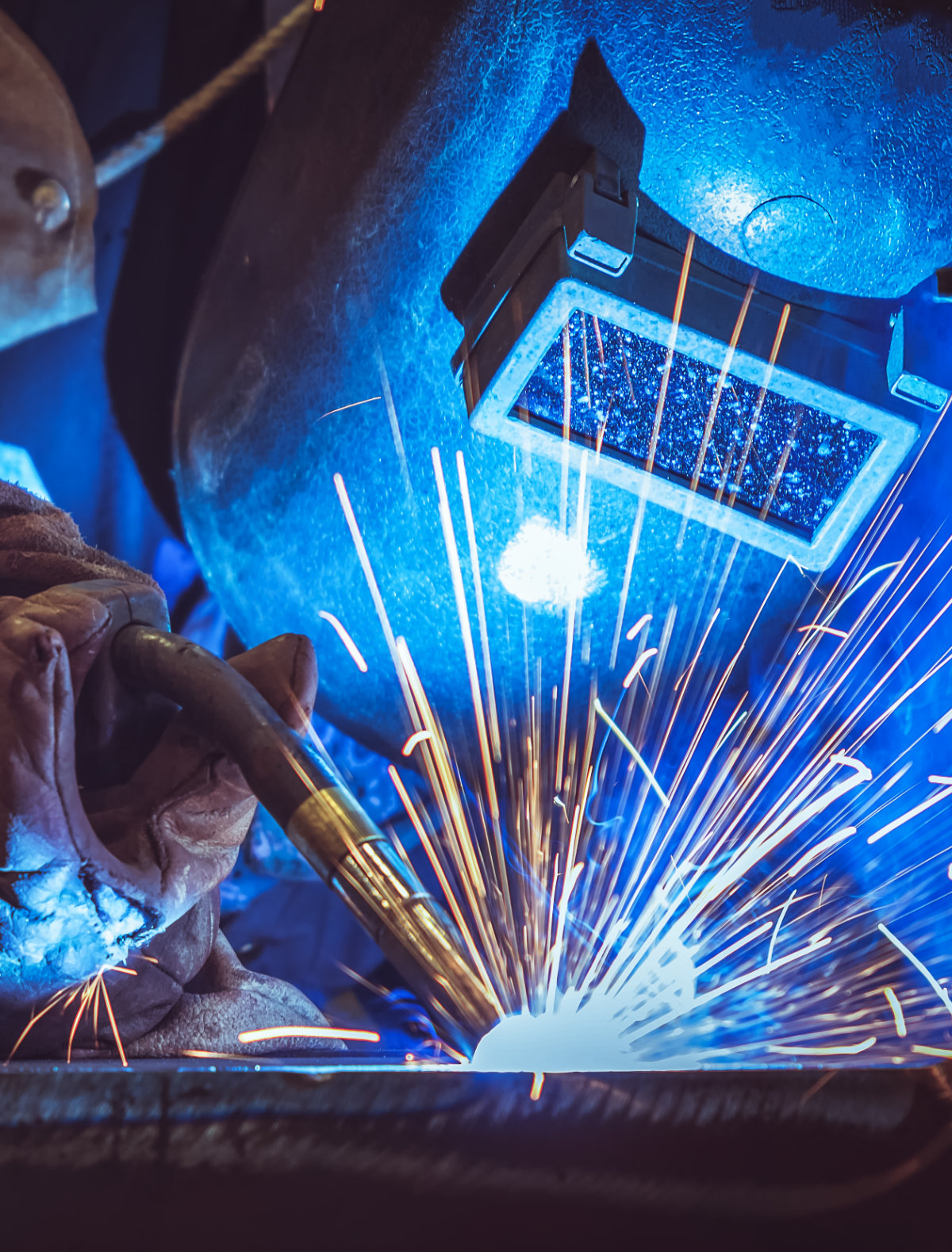

For a durable weld, the molten weld pool must be protected from oxidation and the effects of the surrounding air, for example, with shielding gases or slag. The shielding gas is applied to the molten weld pool using a welding torch. The welding electrode is covered with a material (coating) that, when melted, emits shielding gas and slag.
The most common materials welded are metals, such as aluminum, mild steel, and stainless steel. However, plastics can also be welded – in plastic welding, the heat source is hot air or an electric resistor.
Abrasive blasting is the striking of a high-kinetic-energy abrasive stream onto the surface to be prepared. Thanks to the wide range of abrasives available, we can precisely match the characteristics of the workpiece being prepared.
Examples of processing media:
- Metal media
- Stainless steel media
- Mineral media
- Plastic media